The diesel fires up before work, pulls through the morning, and then needs a long crank after a lunch stop. Let it cool, and the next start improves. Replacing cold-start parts can seem logical, but the complaint is happening when the engine is already warm.
Start by separating slow starter speed from an engine that turns normally but won't fire. The injection system determines which measurements are useful.
Cranking Speed Still Needs to Be Verified
A diesel requires sufficient cranking speed to develop the conditions needed for combustion and injection. A hot starter, cable resistance, or poor ground can reduce that speed even when the battery worked earlier. Trucks with multiple batteries also need their connections and individual battery condition assessed rather than judged as one apparently working pair.
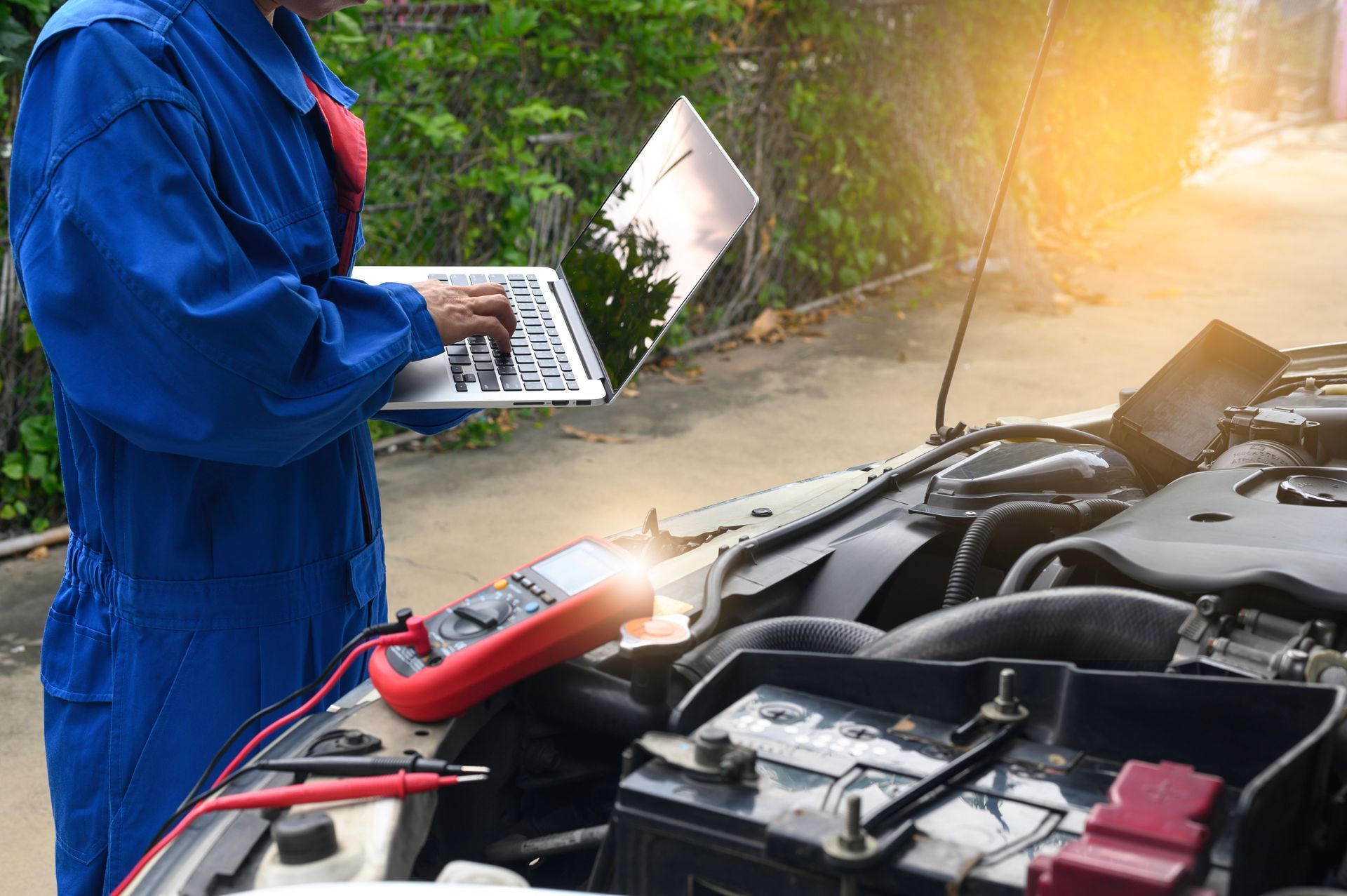
A current test and voltage-drop measurements during the difficult start can reveal where power is being lost. At our shop, we compare hot and cold cranking behavior before pursuing injection parts. A battery voltage reading taken after the engine finally starts says little about the voltage available during the failed attempt. Repeated prolonged cranking can overheat the starter.
Common-Rail Pressure Must Reach the Starting Requirement
On common-rail diesels, the system needs to build the required fuel pressure before injection can operate correctly. Excessive internal injector return flow, a pressure-control fault, or a worn pump can interfere. Warm fuel and operating temperature can make internal leakage more evident, so a system that starts cold can struggle when hot.
Commanded and actual pressure data guide the diagnosis, followed by the appropriate pump, control, and injector-return tests. A low rail-pressure reading doesn't identify the pump on its own. Also consider sensor accuracy and low-pressure supply. Never loosen a high-pressure injector pipe to see whether fuel arrives; these systems require proper equipment and pressure-handling procedures.
Check the Supply Side Before the Expensive Parts
A restricted fuel filter, air entry, a weak supply pump, or a damaged connection can prevent the high-pressure system from getting what it needs. Recent filter service matters because a sealing or priming problem can start immediately afterward. The engine can still run acceptably once started, making the supply fault less obvious during ordinary driving.
Testing should establish supply pressure or vacuum as required by the design, along with signs of air ingress. We review filter installation and service history before recommending high-pressure components. Clean fuel and timely filter service belong in regular maintenance, but replacing a filter alone won't repair a leaking connection or an electrical supply fault.
Oil-Actuated Injection Systems Have a Different Failure Path
Some older diesel designs use high-pressure engine oil to operate the injectors rather than the same arrangement found in common-rail engines. On those systems, a leak or pressure-control problem in the high-pressure oil circuit can interfere with a hot restart. Warmer, thinner oil can make an existing internal leakage problem more apparent.
Check oil level, condition, cranking speed, and injection-control pressure using that engine's procedure. You can't diagnose an oil-pressure concern in this circuit by looking only at the dashboard's standard lubrication-pressure indication. The tests and likely repair differ substantially from a common-rail fuel-pressure complaint, which is why advice from another diesel generation can point you to the wrong parts.
Heat-Sensitive Signals Can Interrupt Injection
The engine controller needs reliable crankshaft and camshaft information to coordinate injection. A signal that drops out when hot can prevent starting even when fuel delivery is adequate. A relay, wiring connection, or module supply problem can produce a similar interruption, sometimes without leaving a useful warning on the dashboard.
A scan during the no-start can show engine speed and synchronization information. Further electrical testing establishes whether the missing signal originates at a sensor, its wiring, or its supply. Replacing a sensor based on a code alone can miss a circuit fault. Report whether the engine stopped while running or only refused to restart after shutdown.
Reproduce the Warm Stop Instead of Testing Only Cold
A diagnostic inspection should reflect the actual sequence: drive duration, engine temperature, shutdown time, and the length of the failed crank. Some complaints appear after a short heat soak and disappear after a longer stop. A morning appointment without time to warm the truck can miss that window entirely.
Bring fuel-filter and oil-service records, plus details of tuning or recent repairs. Don't use starting fluid to overcome a warm-start complaint; glow plugs or intake heaters can make that dangerous, and it doesn't establish the cause. If you see visible leakage, abnormal knocking, or smoke during repeated attempts, stop the test. The repair should follow the failed measurement, not the assumption that every diesel starting problem is a glow-plug issue.
Get Diesel Starting Diagnostics In Leesburg, FL, With DMR Diesel Repair
DMR Diesel Repair in Leesburg, FL, can evaluate warm-start problems using the tests appropriate to your truck's injection system. Explain how long the engine sits before the trouble appears.
Contact us to arrange diesel starting diagnostics while the warm-restart pattern can be reproduced.